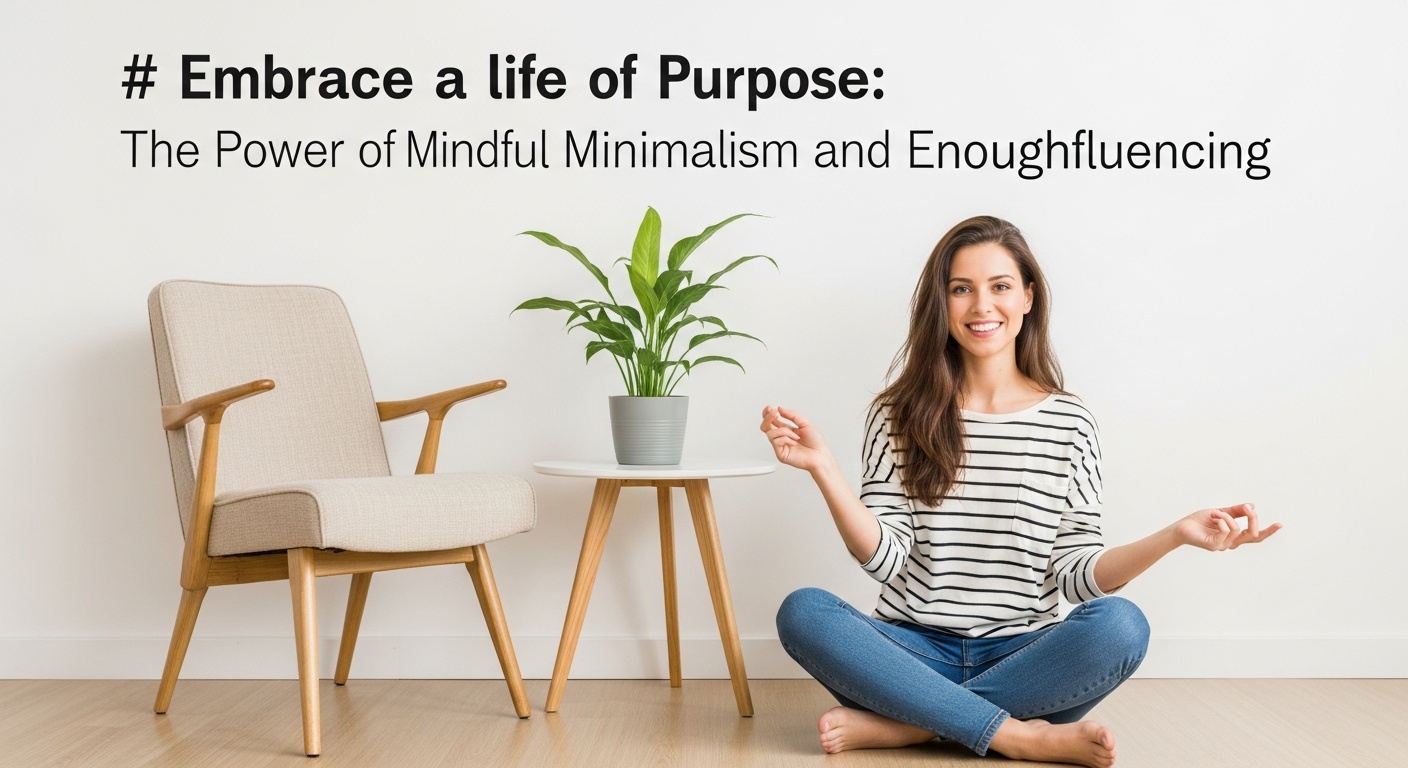
In the digital age, where everyone is always in a hurry, they are always pressured to purchase more, upgrade more, and keep up with the trends. This pressure is increased by social media platforms and made to believe that success is determined by the amount of possession we have. Yet there is an influential change in reaction- Mindful Minimalism and Enoughfluencing. These ideas propagate a way of life that is deliberate, plain, and satisfactory. People are also learning to do with less as opposed to chasing excess by always wanting more, but rather, by doing more with what really counts in their lives.
What is Mindful Minimalism?
Mindful Minimalism is not only about de-cluttering the house, but about living your life with the values you hold. It is the process of being aware of what to retain, what to eliminate and what to welcome in your life. This strategy makes one take his/her time and critique his/her habits, purchases, and priorities.
Mindful minimalism, in contrast to the traditional one that can have a goal of only minimizing physical objects, deals with mental and emotional clutter. It allows individuals to escape the rut of overconsumption and instead make decisions considerately. This can be achieved by prioritizing the quality above the quantity and living a life that is a lot lighter, more organized and meaningful.
The Idea of Enoughfluencing.
Understanding Enoughfluencing

Enoughfluencing is a contemporary reaction to the culture of influencers. Whereas the conventional influencers tend to market products and consumerism, enough influencers encourage contentment with what you possess. They are challenging individuals to keep up with the pursuit of perfection but rather adopt authenticity and simplicity.
This movement is particularly timely when people are increasingly conscious of financial strain and issues of environmental impact. Enough fluencing It refrains from the more is better, but enough is enough, it assists people in being happy with what they already possess.
Why It Is Becoming Popular.
The emergence of enough fluencing is directly connected to the growth in awareness of sustainability and mental health. Clutter, debt and constant comparison are overwhelming many people. This trend is a refreshing change providing mindful living and reality.
With the rise into conscious awareness of viewers, they are attracted to material that seems authentic and not aspirational. Enough fluencing offers relief by bringing normality to simple living and making people choose to make decisions which are oriented towards their own needs instead of being dictated by the society.
The positive side of Living a Frugal and Intentional Life.
Freedom and Economic Security.
A better financial health is one of the greatest benefits of mindful minimalism. As soon as you quit spending money on unnecessary things, you automatically save more money. This will enable you to invest in other valuable causes like education, travelling or emergency funds. In the long run, this results in increased financial independence and less stress.
Serenity and calm of mind.
The environment can be cluttered, and so can the mind. You can enhance your concentration and clarity of mind by keeping things less cluttered, and you can do this by minimizing distractions. Minimalism is mindful and can assist you in building a calm and organized environment, which has a positive effect on your overall well-being.
Environmental Responsibility
Less living also implies less consumption of resources. This saves on waste and decreases your impact on the environment. The selection of sustainable and robust products will help in promoting healthier living on the planet as well as promoting responsible consumer behavior.
Better Life Satisfaction
Once you get to the point of not pursuing material things you start to enjoy the simple things in life. Connection and encounters as well as personal development are valued more than possessions. This change brings about more satisfaction and a more fulfilling living.
Actionable Advice to begin your journey.
Start with Decluttering
Start with an assessment of your possessions. Eliminate things that you do not need or use anymore and get them out of your space. Concentrate on possessing items that have a purpose or cause true happiness.
Practice Mindful Spending
Consider before making a purchase. Ask yourself, is the purchase something you need or an impulse purchase. This practice will assist you in saving avoidable costs and make sound financial choices.
Reduce Digital Noise
Minimize exposure to material that encourages overconsumption. Switch off those accounts that pressurize you to purchase more and follow those who encourage people to live mindfully.
Pay Attention to Experience rather than material possessions.
Use your time and money on things that will bring you memories. It can be traveling, new skills, or time with family, but any experience is more fulfilling than material possessions.
Challenges You Can Expect.
It might be hard to adapt to mindful minimalism and enough fluencing in a society, where people are urged to consume all the time. You might experience peer pressure or have difficulties with some old behaviors like impulse buying.
The other challenge is emotional attachment to things. Disposing of items may be a difficult task, particularly when such items are sentimental. Nevertheless, over time and experience, one can learn to differentiate between valuable things and worthless rubbish.
Consistency is key. Drastic change is not sustainable compared to small, gradual changes. With determination, you will be able to shift to a more conscious and deliberate way of life.
Future of this Trend in Lifestyle.
Mindful minimalism and enough fluencing are not merely a trend, but a cultural change in the long term. With the increased consciousness of sustainability, mental health, and financial stability, these terms will keep increasing in popularity.
Balance, well-being, and purpose may become the new definition of success in the future, where no longer money or material things will define success. This kind of lifestyle prompts people to reconsider their priorities and live a life that best expresses their values.
FAQs
1. Can mindful minimalism be applied to all people?
Yes, mindful minimalism can be followed by anyone irrespective of the way of life or wealth. It may be fine-tuned to individual requirements and objectives.
2. What is the difference between influencing and traditional influencing?
Enoughluencing is concerned with lessening consumption and increasing satisfaction, whereas conventional influencing tends to boost purchasing additional products.
3. Does minimalism enhance mental health?
Yes, it can decrease stress and enhance well-being overall by eliminating clutter and making conscious decisions.
4. Is frugality equal to foregoing comfort?
No, it is not a question of living frugally, but making wise decisions, not sacrificing comfort. It assists in giving priorities on what is really important.
5. What is the time lag to results?
The outcomes can be different, though within a few weeks even the most minor changes can result in the financial and mental state improvement.