The way we think about health is changing. We’re moving away from just treating sickness and toward a focus on optimizing every aspect of human life.
The long-term tech ecosystems-combinations of technologies aimed at improving physical, mental, and biological functioning with age drive this change. Wearables and AI-supported diagnostics are only the beginning of longevity, as it can be no longer about living longer but living better, smarter, and more efficiently.
What Longevity Tech Ecosystems Are.
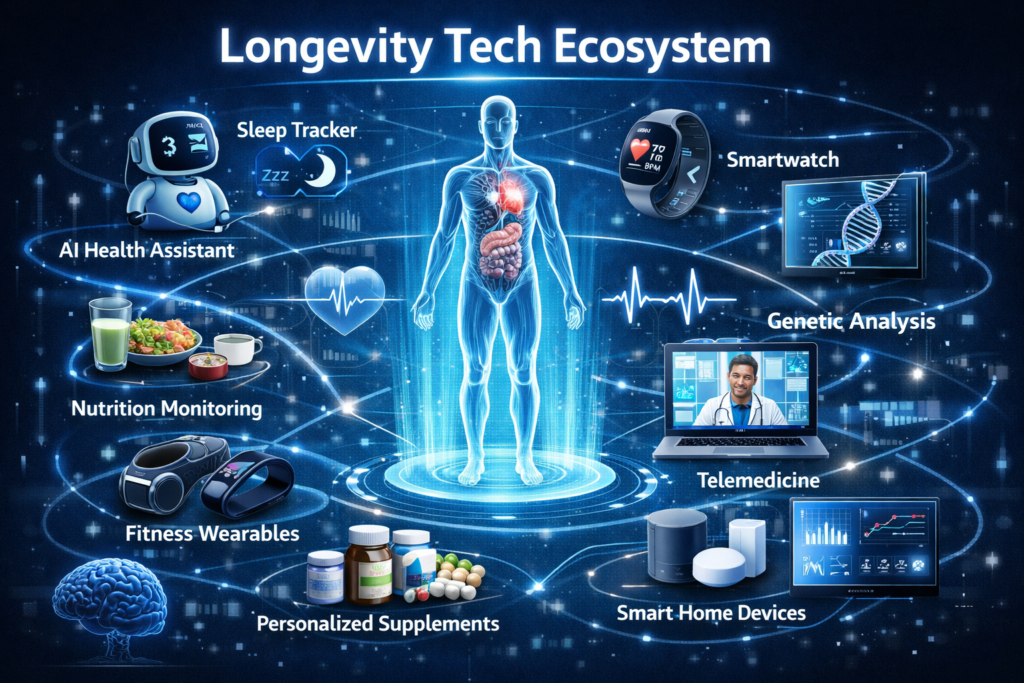
Longevity tech ecosystems are intertwined technologies that can monitor, analyze, and enhance human health in real-time. The ecosystems extend the traditional healthcare systems with proactive, preventive and personalized solutions. They work as an integrated system with devices, software, and data constantly communicating to make healthier lifestyle choices and long-term health outcomes.
Essential Building blocks of Longevity Ecosystems.
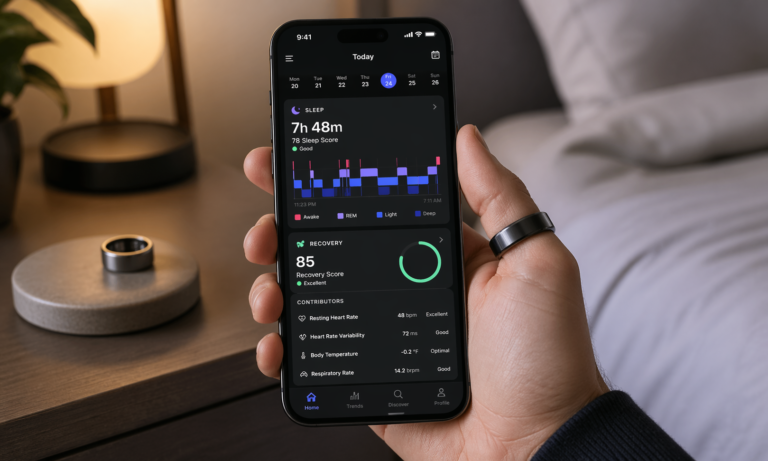
These ecosystems are built using advanced technologies that work together. Wearable devices, like those that track heart rate, activity, and sleep, constantly gather physiological data, creating a real-time stream of personal health information.
Artificial intelligence processes such data to find patterns, risk prediction, and actionable insights, specific to the individual. Individualized nutrition applications also increase optimization through matching the diet plans to genetic and metabolic phenotyping. Moreover, digital therapeutics provide behavioral advice, enabling their users to enhance mental health and habits as well as cognitive performance. The smart environments also contribute to that by automatically regulating the lighting, air quality and temperature to promote overall well-being.
Reactive healthcare to Proactive Optimization.
- Conventional health care aims at curing illness once symptoms are manifested.
- The focus of longevity tech is on early detection and prevention strategies.
- Monitoring health changes to a comprehensive surveillance.
- Rationality in decision making is data-driven as opposed to being assumption based.
- Patients are able to have increased control over their health over time.
Such change is a shift of the mindset. People no longer wait to develop health complications as they now have the means of predicting and averting issues before they get out of control. It also helps to decrease reliance on reactive medical models, and promotes a more active, self-conscious attitude to managing personal health.
The most important differences explained.
The distinction between the traditional healthcare and longevity ecosystems is the basic approach. Conventional systems are siloed systems which mean that patients go to see doctors when they are needed and this may result in late diagnosis and treatment. Longevity tech, on the other hand, is a system that establishes a feedback loop in which the health data is monitored and analyzed continuously. This allows early intervention, individual approach, and better results. Further, longevity ecosystems are not only concerned with avoiding disease but are aimed at increasing performance, energy, mental clarity and quality of life.
How AI and Data are used in Life Optimization.
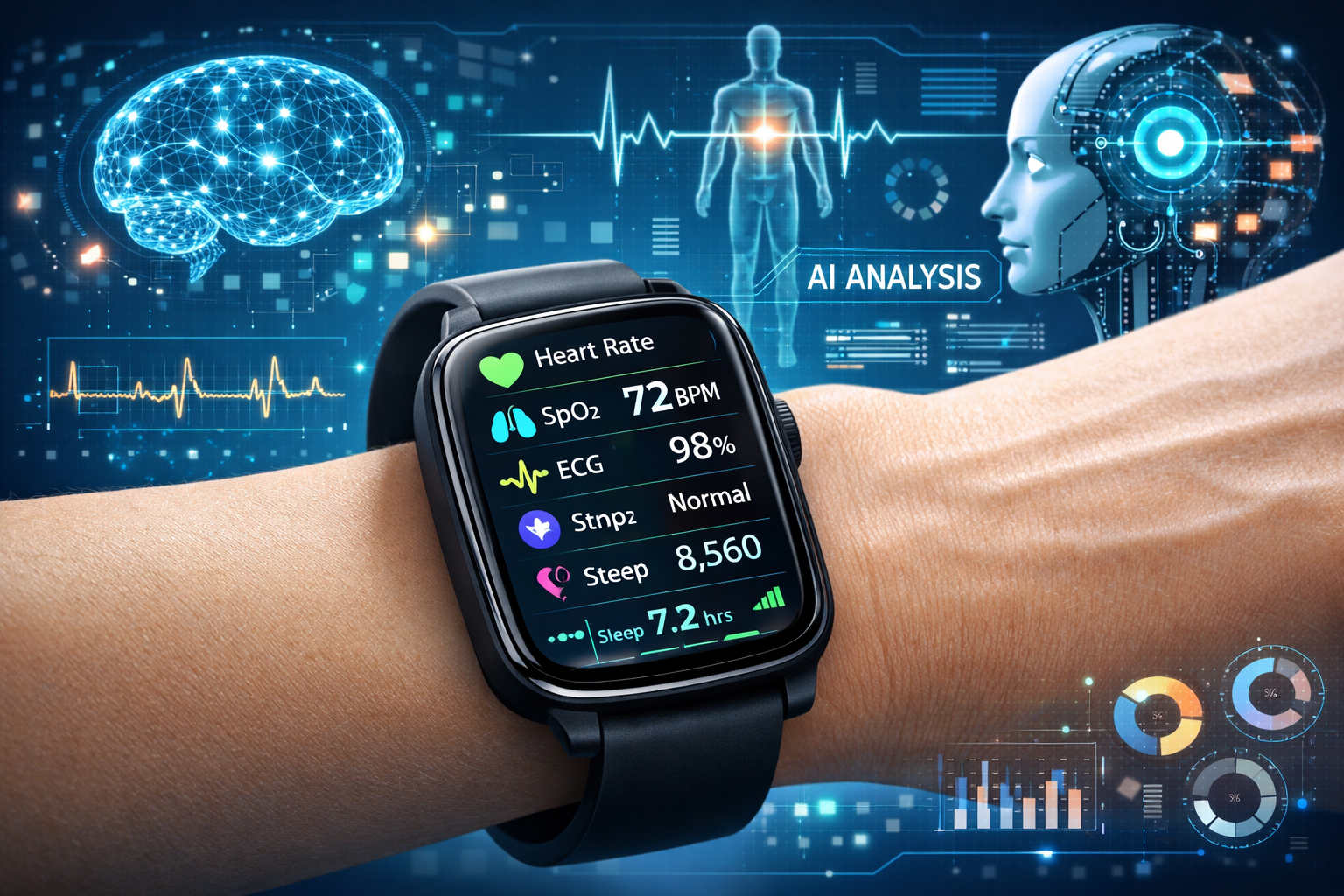
Longevity tech ecosystems have artificial intelligence as the brain. It takes health data gathered in large quantities and volumes and converts it into valuable information. In the absence of AI, wearables and sensors would produce a lot of data that would be difficult to process and analyze.
The way AI Improves Longevity Tech.
The optimization of life with the help of AI is that the program will detect certain trends in health data that a person may not notice. It is able to identify the early warning signs of possible diseases, propose lifestyle changes and even tell how the body is going to react to specific habits or treatment. As an example, AI can suggest the changes in sleeping habits, physical activity level, or nutrition according to current trends in data. It can also be automated and thus less manual tracking and consistency is needed. These insights get more and more accurate over time, as health optimization is made more accurate and efficient.
Longevity as a result of emerging Technologies.
- Biohacking devices to enhance physical and mental capabilities.
- The continuous glucose monitors allow better control of metabolism.
- State of the art sleep machines that improve sleep and performance of the brain.
- Individualised supplements based on scientific evidence and biomarkers.
- Digital twin models that predict using human biology models.
Such technologies are challenging the limits of what can be done in the area of health optimization. They enable one to experiment, test and fine-tune their lifestyle decisions in a scientific manner. With the ongoing innovation, technologies are getting more affordable and easy to use, and longevity optimization is becoming a viable reality to more people.
What is the Story of Breakthrough Innovations?
The latest technologies in longevity do not only entail monitoring health but also enhancing it. The biohacking tools, such as, can allow the user to optimize his or her physical and mental performance by using controlled interventions. CGMs offer instant information on food impact on the body to enable users make better dieting decisions. Environmental and behavioral data are used to optimize sleep and rest, which is essential to long term health by sleep optimization systems. In the meantime, digital twin technology produces virtual copies of the human body, which can be simulated in advance and personalized health plans can be very personalized.
Conclusion
The emerging longevity tech ecosystems are transforming the future of health by making the emphasis on treatment become continuous optimization. Through the combination of AI and data analytics, as well as sophisticated monitoring tools, such ecosystems can enable people to become the active participants of their health. Although there are difficulties like privacy, accessibility and even ethics which should be considered, the benefits that can be achieved are enormous. With the ever-changing innovation, longevity tech will not only increase the lifespan, but also improve the quality of life and therefore healthier and longer living will become a reality to many.
Frequently Asked questions (FAQs).
1. What does longevity tech mean?
Longevity tech Technologies that are aimed at extending life and increasing the quality of life in general by monitoring and optimizing it.
2. What is its difference with traditional healthcare?
Longevity tech, unlike traditional healthcare, aims to prevent, personalize and offer real-time health management as opposed to treating the illnesses once they have arisen.
3. Do we have longevity technologies, and is everyone able to have longevity technologies?
Most solutions are currently costly although with more adoption and innovation, it is likely that they will become affordable in the future.
4. Is uninterrupted health care surveillance safe?
Although it is usually safe, it poses a risk to data privacy and security that have to be accessibly controlled.
5. Will longevity tech help to extend human life?
It could both increase lifespan and healthspan, but the long-term outcomes are under investigation.