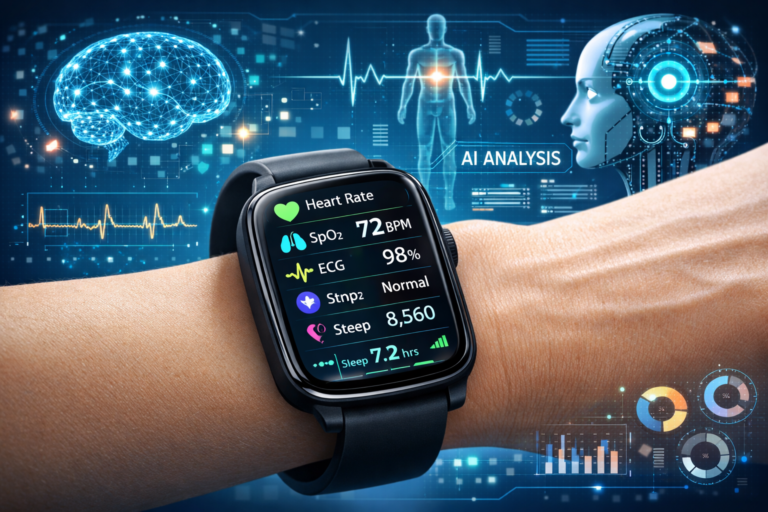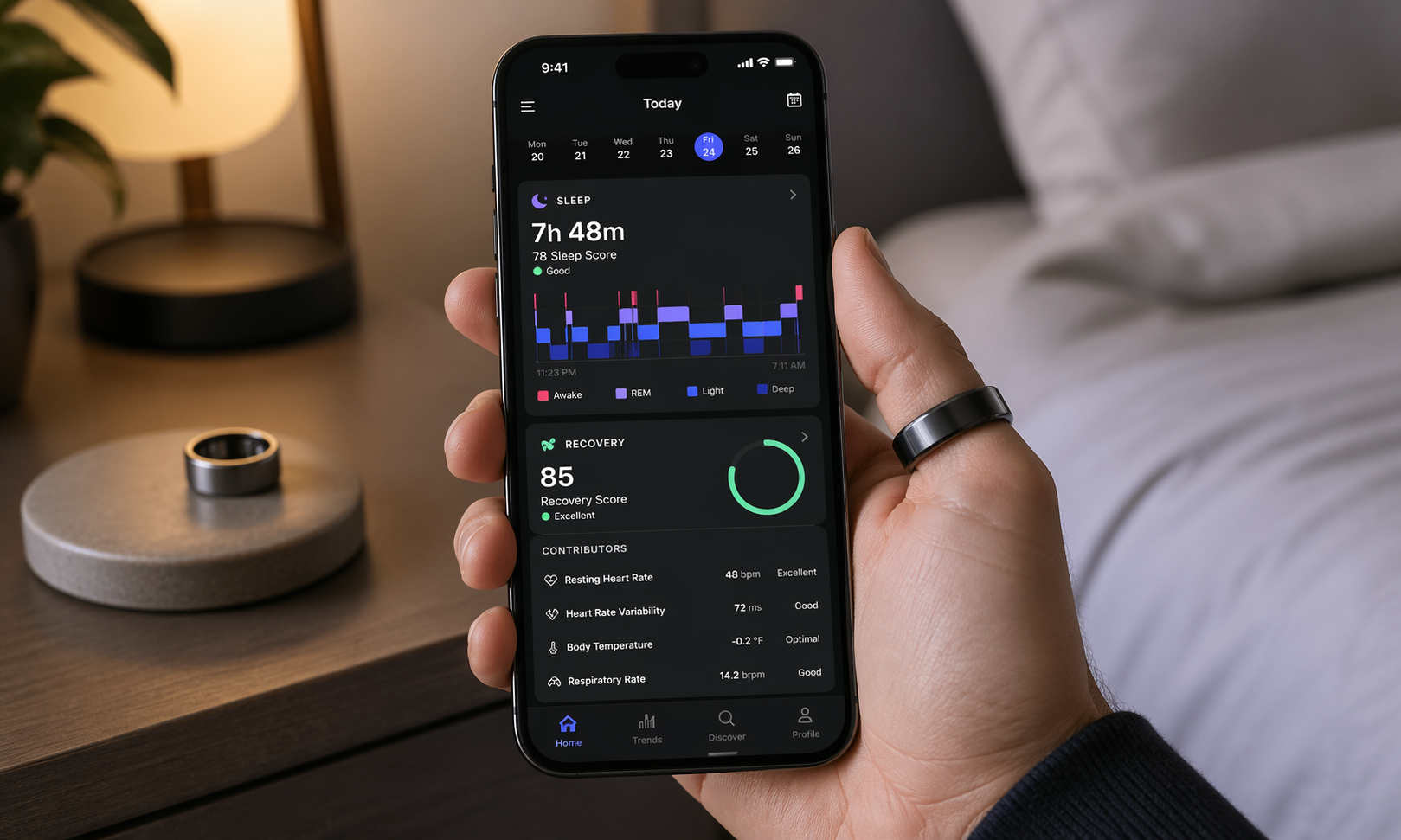
The wellness industry is fast transforming into a smart interconnected ecosystem based on the high-tech world. What began with a simple fitness tracker, has evolved into a complete network of devices, applications and AI-based platforms. Since smart wearables have become a trend such as the Oura Ring Gen3 and WHOOP Strap 4.0 or AI health coaching apps, it has ceased to be passive tracking but rather proactive and personalized optimization of wellness.
This ecosystem view enables users to track, analyze and optimize their physical and mental well-being in real-time, and wellness is now more quantitative and transparent than ever.
Essential Blocks of Wellness Tech Eco Systems.
Smart Wearables and Sensors.
The future of the wellness ecosystem is smart wearables. Gadgets like rings, bracelets and watches constantly gather biometrics information such as heart rate, sleeping habits, oxygen saturation, and activity rates.
In contrast to the older fitness trackers, the latest ones focus on understated design and more in-depth information. Smart rings, such as, are not obtrusive and will give precise data of sleep and rest. Continuous monitoring helps users to know long-term health trends as opposed to occasional check-ins.
AI Health Coaches.
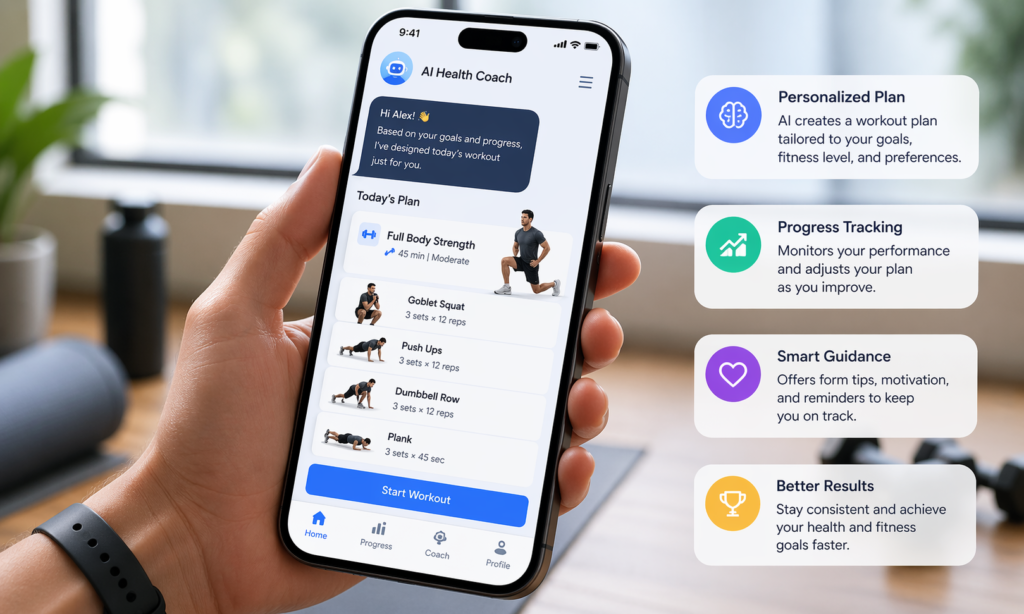
The next technology in the field of wellness is AI-based health coaches. Applications such as Fitbit Premium and Apple Fitness Plus are shifting towards being more dynamic and adaptive, instead of just being a static recommendation.
These AI-based applications process the data provided by users and provide them with personalized recommendations on how they can improve their sleep, how to manage stress, exercise, and eat. As time goes, they get to know how people behave and get their recommendations more precise and efficient.
Combined Health Systems.
Wellness ecosystems are ecosystems that flourish on integration. Information about various devices is centralized and enables users to view an overall view of their health.
An example is correlating wearable data to the mobile app and cloud services to allow more in-depth analysis. The integration underpins such features as predictive health alerts, tracking of goals, and long-term wellness planning.
The most important advantages of Wellness Tech Ecosystems.
- Individual lifestyle and physiology-specific health insights.
- Early pattern detection to preventive healthcare.
- Ongoing care instead of sporadic health examinations.
- Support of behavior change through AI nudges and reminders.
- Anytime, anywhere health management in a convenient and accessible way.
The benefits of wellness ecosystems are that they are very effective in improving health in the long term.
Problems and constraints.
- Data security issues regarding very personal health data.
- Inaccuracy with respect to medical-grade devices.
- Excessive dependence on technology rather than on awareness of the natural body.
- Expensive prices of high-quality devices and subscriptions.
- Disintegration because of absence of smooth integration of platforms.
These are some of the challenges that have to be tackled to create trust and scalability in wellness tech.
Future Trends in Relation to the Future.
Predictive Health Analytics.
Wellness platforms in the future will not only monitor health, but they will foresee possible problems. With the help of time-based patterns, AI systems can alert users about such threats as burnout, sleep issues, or heart issues. This reactive to predictive care will transform the way people will take care of themselves in their day to day lives.
Integration of Mental Wellness.
Mental health is emerging as a fundamental aspect of wellness ecosystems. Devices can now monitor the amount of stress by monitoring heart rate variability and provide guided meditation or breathing exercises, which makes them more holistic in their approach to well-being. Mental health tracking tools will equally be valued as physical health tracking as more people become aware of the importance of this.
Digital Twins of Health.
The digital twin idea (a virtual representation of the health of a person) is becoming more popular. This enables modeling of lifestyle modifications and their effects on health results, which personalization is more accurate. Virtual testing of various habits by users can be tested virtually in the future and then be put into practice in the real world.
Ecosystem Interoperability
Technological companies are striving to have increased compatibility among tools and systems. This guarantees a more seamless data flow, less fragmentation and a smoother user experience. Open systems will be instrumental in streamlining and making wellness technology easier and more user-friendly.
Applications in the Real World.
Optimizing Fitness Personally.
Performance is fine-tuned with the help of wearables by the athletes and fitness enthusiasts. The recovery scores, level of strain and quality of sleep are used to optimize training schedules and minimize the chances of injury. This data-driven solution enables smarter exercises and better overall performance in the long term.
Management of Chronic Disease.
Individuals with such conditions as diabetes or hypertension can enjoy the advantages of constant monitoring and notifications, which enhance the management of the disease and allow taking timely actions. These ecosystems enable patients to have a greater control of their health outside clinical environments.
Work Wellness Programs.
Wellness tech ecosystems are being incorporated in organizations as a way of improving the well-being of employees. Such programs allow eliminating stress, increasing productivity, and ensuring healthier workplace behaviors. Employee wellness is becoming a strategic investment, not a perk, to companies.
Conclusion
Wellness technology platforms are changing the way people think about wellness and health. They provide an active, personalized and information-driven wellness by integrating smart wearables, AI-based coaching, and interconnected tech.
Although issues such as privacy and accuracy still exist, constant innovation is enhancing the reliability and usability. With the increase in technology, these ecosystems will probably become an inseparable part of the daily routine as it will enable people to have a stronger grip on their health.
F&Q Section
What is the wellness tech ecosystem?
Wellness tech ecosystem A network of interconnected devices, applications, and AI that collaborate to track and enhance overall health.
Do smart wearables work as health trackers?
They can be very helpful in offering insights and trends, but do not necessarily compete with the accuracy of medical-grade machines.
What are the mechanisms of AI health coaches?
They interfere with user data and provide personalized fitness, sleep, nutrition, and mental health recommendations.
Am I safe with my health information in these ecosystems?
The majority of sites use encryption and security software, yet the privacy policies of users should be re-read.
Do wellness techs substitute physicians?
No, it is just an assisting tool to check and observations but is not able to substitute professional medical knowledge.